
 Posts
Posts


It wasn't supposed to be this way. We were supposed to have it sussed by now. You wouldn’t think that anything is awry from the plaudits laid upon Darwin in the bicentenary year of 2009. The impression these celebrations gave is that biology is all sorted. We know what it is all about - Darwin laid the seed and everything we have learnt about evolution has just followed on from there.
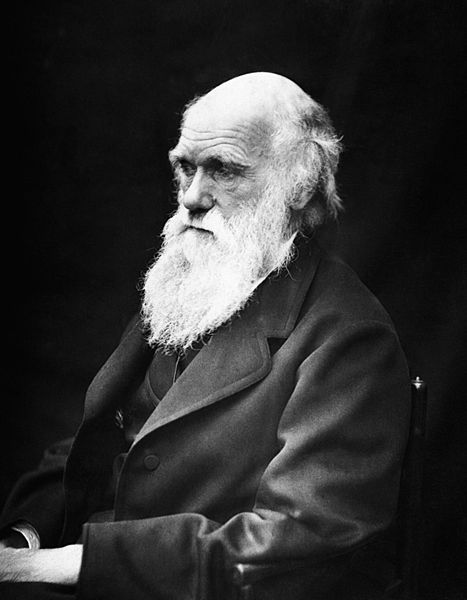
The discovery of the structure of DNA in the 1950s just seemed to cement the paradigm - we had the mechanisms by which evolution occurred. And so we entered the era which is sometimes known as neo-Darwinisn which combines his theories with modern knowledge of genetics. It has given rise to some extreme views such as Dawkins' selfish genes which basically says that the whole point of an organism, all its behaviours and traits, are simply geared towards the survival of the gene in order to pass it onto their progeny. Genes are dictating from within and reign supreme.
Ironically, Darwin was more flexible than his so-called champions who have come after him; he was a true scientist in that he knew that discoveries that were to come after he was gone, may prove him wrong and he was quite open to that.(1) Not so the neo-Darwinists who have given the public the impression that the mechanisms of hereditary have long been sussed. Instead, new evidence is emerging all the time which is showing up the Neo-Darwinists' ideas for what they are - metaphors and dogmas, not the true spirit of open science, based on evidence and exploration.(2) It turns out that life is much too complex to be reduced to the selfish needs of one molecule. Let’s look at three areas of this current paradigm revolution.
Revolution number one - Get with your surroundings
The debate has long raged in biology, how much are we due to our genes and how much due to our environment? The debate seemed to have been won by the gene advocates who have ruled the arena for so long, we have almost forgotten that there ever was another point of view.
Indeed, those who have suggested that the environment has anything to do with the expression of genes have been seen as heretics. It has instead been a gene dictatorship and we have been reduced to passive pawns in a game of evolution which has nothing to do with us as individuals, but is all about maintaining the immortality of a molecule within us.
Well it turns out that those who position themselves as über scientists are just not proposing a scientific viewpoint. The evidence is mounting within mainstream academic science that the environment has a strong effect on gene expression. Taken further with the emergence of Bruce Lipton's excellent and ground-breaking work, it is the perception of the environment which feeds back to receptors in the cell membrane, informing gene expression.
No doubt, Lipton's work will be seen as heresy by many. After all, they have taken all this time to consider an environmental input for gene expression and they do not want to add something as nebulous as 'perception', which cannot be felt or dissected, to the rapidly changing mix. I refer you to Lipton's website for the papers on how perception of the environment alters gene expression.


That is not all - recent findings have taken us far from the view that we are automatons simply existing to propagate our genes which dictate our lives to us. Evidence is emerging that shows epigenetic modulations to the genome could even be passed onto our progeny.(3) This means that the changes to the expression of its DNA that one organism learns during the course of its lifetime in response to its environment are actually passed onto its children. The gene is no longer in dictatorship: it turns out that it has been listening all along! We are living in flow with our environment and this shows up at the molecular level.
Revolution two - Survival of .. those who cooperate
‘Survival of the fittest’ - it started out as a tenet of Darwinian biology but gradually became entrenched into our psyches as we came to believe that this is simply how things are, wasn’t biology telling us so? Darwin’s concept of natural selection meant that if a population is faced with adverse environmental conditions, the ones who happen to have favourable genes, perhaps through a random mutation, will adapt better to the environment and therefore survive to a reproduce more progeny who will also spread this new adaptive advantage until eventually the new population replaces the old.
It is all very good in theory and this clawing-your-way-to-the-top-of-the-pack mentality has fueled our beliefs and imaginations, for example the Gordon Gekko character of the 1980s hit film Wall Street who compares his behavior to the processes of evolution.
Does the science add up however? Recent findings would suggest that this kind of rapid spread of an advantageous gene has been very rare within human populations (and in many plants and animals too), with it more likely to spread slowly due to natural population migration rather through a fitter population replacing another. (4) In fact, if some members of the population are blessed with a genetic advantage, rather than knocking out the rest of the population, could it be that they have actually helped the rest of the population to survive? Could human beings have been practicing cooperation the whole time?
In any case, the evidence is showing us that we need to reassess the rules of natural selection as it seems that survival of the fittest may not be the law of the jungle anymore. It will be interesting to see what this will do to our psyches if this new scientific evidence trickles down to the public. Will this lead to a reinvention of Gordon Gekko’s famous line as ‘cooperation is good”?
Revolution Three - Back to the drawing board with the human genome
Ten years ago, it all seemed so tangible; the human genome project was about to be completed and the excitement was building in anticipation of an era of personalised medicine. Once the genome had been sequenced we believed that we were going to create medicines that were specific to the individual based on their genetic profile. We also believed that we were going to be able to predict which diseases we were likely to get in the future.
Ten years and much analysis later, the results so far have been almost universally disappointing. People thought that by analysing lots of different people’s genomes, those who have diseases and those who don’t, they would be able to tell which patterns of DNA belonged to which disease. (5)
 |
| The human genome project has not lived up to its promise of better health |
This was done by monitoring something called single nucleotide polymorphisms or SNPs. To understand this concept, think of a stretch of DNA like a word that we all carry around. If everyone carries the same word, but some of us spell it slightly differently, for example by substituting some of the letters, we can examine whether these changes have any consequences such as disease?
Just a few years ago scientists were confident that if we found these changes, we would be able to tell which changes led to which diseases and certainly some scientists still feel that way. But many are starting to come around to the view that we have been barking up the wrong tree all along. When we look at the SNPs that we know about, they do very little to predict disease. Even though we have identified many SNPs for diabetes for example, it turns out that this is only allowing us to predict 6% of the heritability of the disease.
These dim results have caused David B Goldstein of Duke University to proclaim, the whole hypothesis as a thing of the past, saying, “We have entered and left that field, which explained less than a lot of people thought it would.”
So what now? What does it mean that, with a few exceptions, we cannot find a strong correlations between our genome and diseases? Some are already looking beyond the DNA to epigenetic factors and examining how these lead to disease. Some are realising that so-called ‘junk’ DNA, which has previously been discarded as not having any function, may have important regulatory functions.
But what if there is a further lesson here? Even when the human genome project revealed that we only have 20,000 genes, far fewer than the 150,000 expected, some still clung to the paradigm that genes make us who we are. And now that the results show fairly conclusively that, except in some rare cases, we cannot look to our genome to tell us if we are likely to develop a disease or not, some scientists seem to think that the promised land still exists.
What if we need to look deeper to find the answers to why we behave the way we do, or develop diseases? If we cannot look to a molecule within us, maybe we need to look deeper than that. Physics has long declared matter to be made up of information, not of solid particles. This information lies deep to the molecule and deep to the atom and makes up all of matter, not just our DNA molecules. What if this information had an inherent sentience within it which caused the self-organising behaviour that we see all around us in Nature.
Every single molecule seems to know what to do as if it were inherently intelligent. With the revolution currently occurring in physics, biology should look to the new scientific paradigm and wonder whether information deeper than the level of the molecule is actually powering the formation of our human bodies. And if we have a disease, just maybe this is caused by a change in this information which then causes a change in our physical bodies. Our current theories have been proved to be wrong, we need to embrace the new.
Conclusion
Many of the most enshrined ideas in biology are toppling. This is not happening due to its critics but from within the field itself. When we look at how one by one science’s most cherished ideas have fallen: from the selfish gene, survival of the fittest and gene therapy, we need to face the facts that we have simply got it wrong.
Nature is so much more fluid than we have been previously believed. We are not the results of the dictation of molecular machinery. We are entering into a new era of exploration and for those who can open their eyes to see it, it is as exciting if not more as the era that gave us relativity, the theory of evolution and quantum physics.
Because in the first time in human history the cycle of knowledge is coming all the way back again to what we knew in our deep past: that we are not machines, but connected to something deeper, that intelligent information flows through us and communicates with our environment, that human survival is so much better when we cooperate, not when we knock the ‘other’ out. Here’s to a paradigm revolution in biology! I hope that you are one of those who are going to be there.
1. Darwin C. On the Origin of the Species. (Dover) 2006.
2. Elsdon-Baker F. The Dawkins Dogma. New Scientist. 19th July 2009.
3. Ibid.
4. Pritchard J. K. How we are Evolving. Scientific American. October 2010.
5. Hall S. S. Revolution Postponed. Scientific American. October 2010.


